
Genshin Impact Song of the Welkin Moon Reprise and Its Enduring Lore
Genshin Impact Version 4.7's Song of the Welkin Moon: Reprise revives moonlit desert lore, bridging buried history and future storytelling.
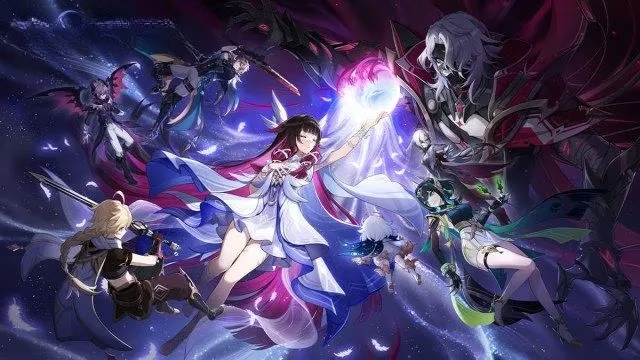
Long before the deserts of Sumeru were fully mapped, the moon already served as one of Teyvat’s most persistent symbols. With the arrival of Genshin Impact’s Version 4.7 event, Song of the Welkin Moon: Reprise, that long-running motif returned to the surface in dramatic fashion. The official trailer, released on 2024-06-05 (UTC+8), presented a moonlit desert, shadowed ruins, and a tone that felt less like a routine seasonal event and more like a deliberate invitation to re-examine forgotten history. For veterans looking back from 2026, the event still stands as a key narrative bridge—one that connected early moon lore with later desert-focused storytelling and offered a preview of how HoYoverse layers mechanical tests inside narrative packages.
Event Overview at a Glance
| Detail | Information |
|---|---|
| Patch title | Song of the Welkin Moon: Reprise |
| Trailer released | 2024-06-05 (UTC+8) |
| Major lore focus | Moonlight, buried history, desert motifs |
| Rewards, materials | Not stated in official materials |
| Event duration | Not stated in official materials |
| Official trailer | HoYoverse YouTube Channel |
Why the Welkin Moon Still Matters
“Wayfarer traversing an ocean of sand, why do you linger beneath the moonlight?… Secrets cannot stay buried forever.”
That line is more than atmospheric. For players who followed Enkanomiya’s Three Realms Gateway Offering in Version 2.5 or the Liyue Archon Quest, the moon is not just a celestial body—it is a symbol tied to ancient civilizations, cycles of ruin, and Khaenri’ah’s lingering scars. Could this event be a simple thematic callback? The evidence suggests otherwise. The desert backdrop, the reference to the tide of history, and the phrase ‘secrets cannot stay buried forever’ all point toward a deeper return to world-quest content rather than a standalone celebratory patch.
What Veterans Were Watching For
Veteran players understood that narrative-heavy events often double as testing grounds. When Version 4.7 arrived, attention focused on potential new artifact sets, ascension materials, or boss mechanics that could shape future five-star banners. Official banner phases and rate-ups remained unconfirmed at the time, which made preparation even more important.
-
🌙 Resin Cap: Stockpile fragile resin in case the event introduced new bosses or materials.
-
🗺️ Daily Tasks: Monitor preview missions and limited shop surges, which frequently appear during lore events.
-
⚔️ Team Prep: Prioritize survivability and exploration, especially desert-oriented setups, in case new subzones opened.
-
📜 Lore Notes: Review moon and Khaenri’ah questlines to catch hidden dialogue references.
What did all this preparation actually protect against? It protected against the frustration of needing new materials after banners or content had already launched.
Free-to-Play Considerations
The Welkin Moon branding has a history of moon-themed login rewards or limited exchange shops, most notably in Version 2.4’s Fleeting Colors in Flight. If the pattern repeated, free-to-play players would need to be careful.
-
Prioritize event shop purchases tied to enhancement materials or Crowns of Insight.
-
Delay Primogem expenditure until banners are officially confirmed.
-
Calculate pity only after official start dates and unit reveals.
This kind of patience avoids suboptimal pulls against future Fontaine or Snezhnaya banners.
Community Theories and Lore Speculation
The Genshin subreddit and major theorycrafting circles dissected the Elegy for Faded Moonlight trailer. Many pointed to persistent moon and desert themes as possible foreshadowing for a Dehya rerun or a new Sumeru support—though nothing was confirmed. Others speculated about long-rumored moonlit domains from the game’s beta days.
Older players were particularly drawn to the melancholic tone, comparing the event to Enkanomiya’s seasonal content from Version 2.5 and noting the shared secret-under-the-sands motif. These convergences often precede meaningful story revelations or the introduction of powerful quest-locked gadgets.
Visual Clues and Possible Map Expansions
The trailer’s pacing and color palette recalled both the original Welkin Moon promotional art and several unused cinematic sequences datamined in early patches. Specific lines such as ‘Secrets cannot stay buried forever’ echoed mission text first found in the ruins east of Aaru Village. Careful analysis of environmental lighting and structure silhouettes in the trailer background suggested new areas or subzones might become available. HoYoverse has historically used matching architecture and sand patterns as preludes to region expansions, as seen before Inazuma and Sumeru.
Was this merely promotional mood-setting, or was the company revealing more than it seemed? Many lore trackers chose the latter interpretation.
What the Reprise Means Today
Even in 2026, Song of the Welkin Moon: Reprise remains a valuable case study in how Genshin Impact uses limited-time storytelling to bridge persistent lore and future gameplay. The event did not just revisit a moonlit mystery; it gave veterans a framework for reading visual teasers, patch cadence, and community speculation. Players who paid attention to event drops and delayed Primogem spending were better positioned when later banners and content cycles unfolded.
Bookmark the official Genshin Impact YouTube Channel and monitor @GenshinImpact for real-time news. EarlyGG will update with full event guides, reward breakdowns, and F2P optimization once further information becomes available.
Details are provided by ESRB, whose content descriptors offer a grounded way to contextualize how Genshin Impact packages darker themes—ruins, buried history, and conflict—inside an accessible event format. When reading Song of the Welkin Moon: Reprise as more than mood-setting, pairing its moonlit-desert imagery with rating-style framing helps veterans separate lore tone from mechanical expectations, clarifying why HoYoverse can hint at ancient tragedies while keeping the moment-to-moment gameplay oriented around exploration challenges and limited-time objectives.